Ho Chi Minh City Maritime Administration Advances Digital Transformation to Enhance the Effectiveness of Administrative Reform
Mr. Pham Anh Tuan, General Director of Portcoast, also noted that progressing towards smart ports in the era of the Fourth Industrial Revolution requires not only software for managing port operations but also comprehensive digital transformation. This includes digitizing infrastructure to create a digital twin of the entire port system—an undertaking recognized by many countries with well-developed port sectors.
Building and using software to manage vessel activities
As reported by Bao Xay Dung on 29 October 2026, the Ho Chi Minh City Maritime Administration had handled 398,525 electronic dossiers for vessels arriving at and departing from its port waters by October 2026. This figure reflects years of work to introduce digital technology into maritime administrative services.
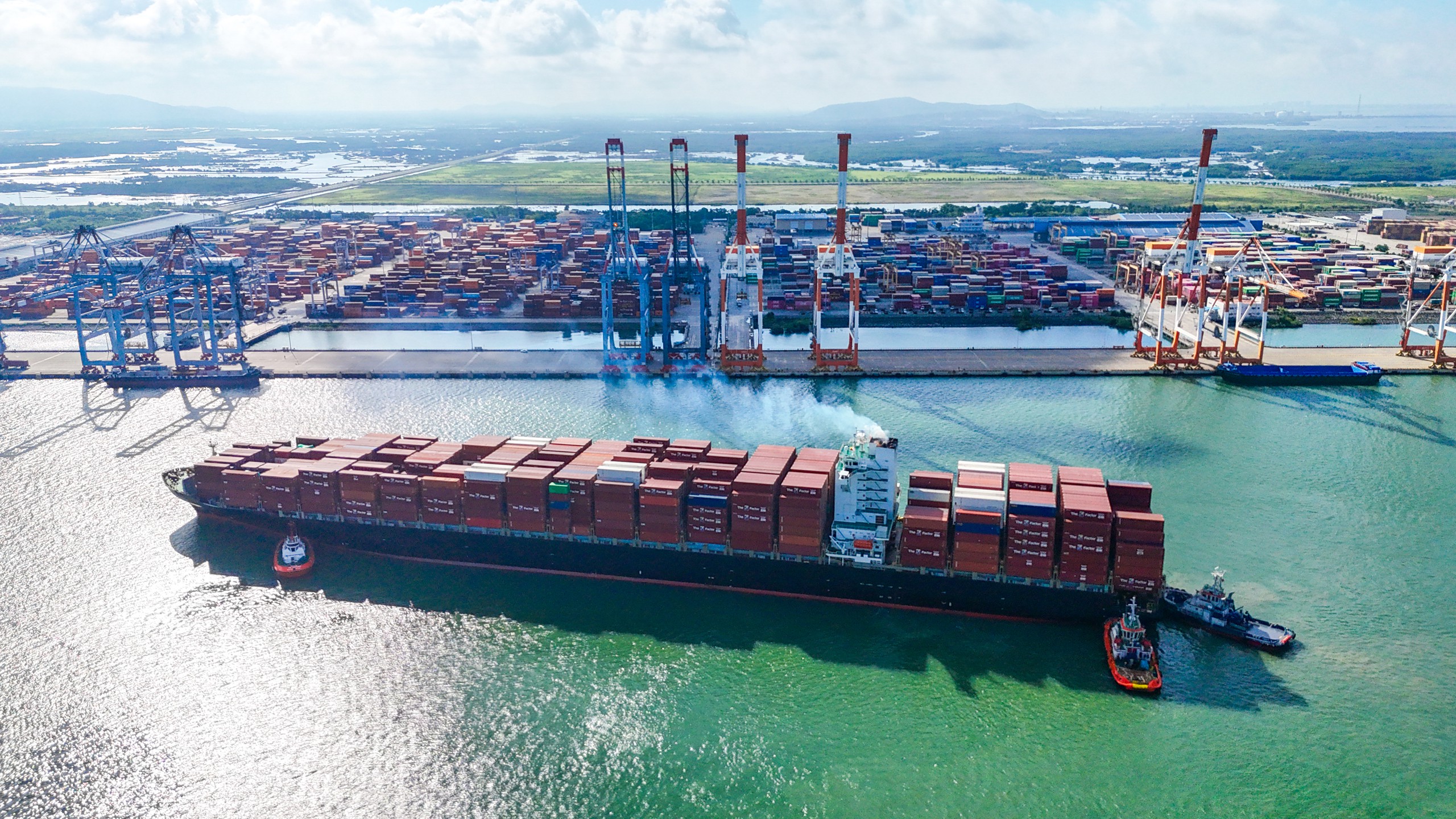
Aerial view of seaport infrastructure (illustrative image). Source: Portcoast website archives.
Preparing for the change involved upgrading internal systems, procuring equipment, training personnel and helping maritime service providers use online services. Businesses operating at the ports were given guidance and user accounts so that they could participate in the new procedures.
The authority first deployed software for tracking vessel activity in the waters under its jurisdiction in 1996, with regular improvements in subsequent years. A more coordinated investment in online public services began in 2015, expanding its capacity to manage administrative procedures electronically.
Inland waterway vessels have also been brought into digital workflows. Between 1 January 2022 and 30 June 2025, permits for 67,814 vessel movements into and out of port facilities were processed through the system.
Electronic port-departure permits were introduced for VR-SI, VR-SII and VR-SIII vessels on 1 February 2026, with 35,024 permits recorded. The measure was extended to VR-SB vessels on 1 July 2026, reaching 1,728 permits. These changes help simplify procedures for vessel owners and port businesses.
For maritime charges and fees, the authority uses cashless payment methods and electronic receipts. It had issued 417,785 electronic receipts by October 2026, reducing paper-based processes while making payment records easier to check and reconcile.
The authority also draws on arrival and departure information collected by the Vietnam Maritime and Inland Waterway Administration to oversee inland waterway vessels exempted from certain formalities under Circular No. 20/2026/TT-BXD. This supports maritime safety and security, fire prevention and the prevention of environmental pollution.
The measures are consistent with Politburo Resolution No. 57-NQ/TW of 22 December 2024, which focuses on science, technology, innovation and national digital transformation. Replacing paper archives with electronic records improves the handling and retrieval of information and reduces time and costs for businesses and the public.
To assist vessel operations, the authority has developed a movement planning map that displays ship locations, routes, planned movements and operational status. Its Vessel Traffic Service (VTS) also supports the coordination and monitoring of vessel traffic in shipping channels, contributing to safer navigation.
Connecting the seaport system and strengthening logistics chains
Citing the Ho Chi Minh City Department of Science and Technology, the article describes science, innovation and digital transformation as important drivers of development. For seaports, the objective extends beyond online paperwork to better connections among regulators, port operations and logistics activities.
The expansion of Ho Chi Minh City’s development area brings together the Cai Mep - Thi Vai deep-water port cluster, river ports, industrial parks and production hubs. Unlocking the benefits requires timely data exchange among terminals, warehouses, transport operators, shipping lines, businesses and the relevant authorities.
Mr. Pham Anh Tuan, General Director of Portcoast (Port and Marine Engineering Design Consulting Joint Stock Company), and an Executive Committee member and Head of the Seaport Committee of the Ho Chi Minh City Logistics and Seaport Association, said the progress made by the Maritime Administration demonstrates tangible improvements in public management: faster and clearer procedures, less direct contact, lower costs for companies and stronger monitoring capabilities.
Rendering of a seaport master plan (illustrative image). Source: Portcoast website archives.
According to Mr. Tuan, smart ports require more than operational management applications. A wider digital transformation should include digitizing physical infrastructure to establish a digital twin of the entire port network, an approach pursued in countries with advanced seaport industries.
The Ho Chi Minh City Maritime Administration has collaborated with Portcoast and the former Ba Ria - Vung Tau Provincial People’s Committee on a comprehensive digital representation of ports in Ba Ria - Vung Tau. The 3D model brings together existing conditions and development plans, including quays and terminals, public maritime infrastructure, connecting facilities and land designated for port-related development.
The project provides a basis for developing a digital twin of the greater Ho Chi Minh City port system. The article presents the city as the first locality to have undertaken comprehensive port digitization of this kind.
Looking forward, connecting information from the Maritime Administration, port operators, pilots, towage providers, shipping lines and logistics companies will be essential. Integrating these data flows with the physical movement of ships and goods can support a connected digital maritime-logistics ecosystem, smarter ports and improved national competitiveness.
This English adaptation is based on reporting by Mai Huyen, Bao Xay Dung, 29 October 2026. Read the original Vietnamese article on Bao Xay Dung for the original text and newsroom photographs.
Source: baoxaydung.vn
Pageviews: …
PORTCOAST ỨNG DỤNG CÔNG NGHỆ DIGITAL TWIN THÚC ĐẨY PHÁT TRIỂN CẢNG BIỂN VIỆT NAM
Theo esri.com - 20/10/2026
Ông Trần Phúc Minh Quang, Phó Tổng Giám Đốc Portcoast, chia sẻ cách Di...
KHI “CHẤT XÁM” TƯ VẤN VIỆT NAM ĐI RA THẾ GIỚI
Theo dacsan.thanhnien.vn- 12/10/2026
Nhân ngày doanh nhân Việt Nam 13/10, Đặc san Doanh nhân 2026 của Báo T...
GIẢM CHI PHÍ LOGISTICS, NÂNG GIÁ TRỊ GIA TĂNG TỪ HỆ THỐNG CẢNG BIỂN
Theo baotintuc.vn - 18/09/2026
Theo ông Phạm Anh Tuấn, Tổng Giám đốc Portcoast, năng lực cạnh tranh c...