PORTCOAST CONTRIBUTES INFRASTRUCTURE SOLUTIONS FOR HO CHI MINH CITY’S NATIONAL INDUSTRIAL–ENERGY HUB
At a seminar on developing Ho Chi Minh City into a National Industrial–Energy Hub, Mr. Ngo Manh An – Deputy Director of the Port & Waterway Engineering Consulting Center (PEC), Portcoast emphasized the critical role of maritime infrastructure in supporting the growth of the energy industry. Based on the existing conditions of the Cai Mep – Thi Vai – Ganh Rai area, Portcoast proposed upgrading the Dinh River navigation channel to accommodate vessels of approximately 70,000 DWT, improving the transportation capacity for large-scale equipment and components required by energy projects. The recommendations presented by **Mr. Ngo Manh An and Portcoast highlight the important role of engineering consultancy in identifying infrastructure bottlenecks, planning strategic solutions, and laying the foundation for the long-term development of Ho Chi Minh City’s industrial–energy hub. Infrastructure that moves ahead today will create greater opportunities for Vietnam’s energy industry tomorrow.
The proposal to develop a National Industrial and Energy Center in Ho Chi Minh City is currently at the outline preparation stage. The Center is being studied under an integrated model covering gas, LNG, electricity, petrochemical refining, and renewable energy, while being synchronously connected with the seaport system, logistics, manufacturing industry, technical services, research, and human resource training.
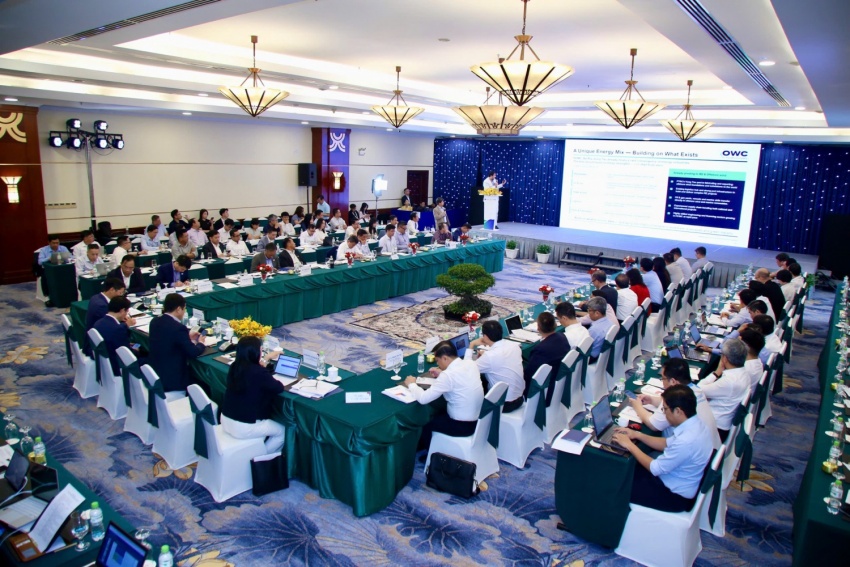
The seminar "Towards the Establishment of a National Industrial and Energy Center in Ho Chi Minh City" was chaired by the Ho Chi Minh City Department of Industry and Trade and jointly organized with PTSC.
Given its interdisciplinary and interregional scope and substantial investment requirements, the Proposal needs to clearly define the functions of each area, the potential linkages among projects, shared infrastructure, and the respective roles of the State and enterprises. The consultation at the seminar aims to strengthen the scientific and practical basis, identify the necessary conditions to refine the model, select priority projects, and develop an appropriate implementation roadmap.
On that basis, experts and enterprises analyzed each component of the Proposal, focusing on the energy industry value chain, experience in developing renewable energy centers, the RE-Hub model, and maritime infrastructure.
Positioning the Center in regional competition
Mr. Tran Ho Bac, General Director of PTSC, emphasized that the Proposal should more clearly reflect its national stature and international competitiveness objectives. In his view, Ho Chi Minh City should not only compare itself with domestic energy centers but should aim to compete with centers being developed in Malaysia, Indonesia, and Singapore.
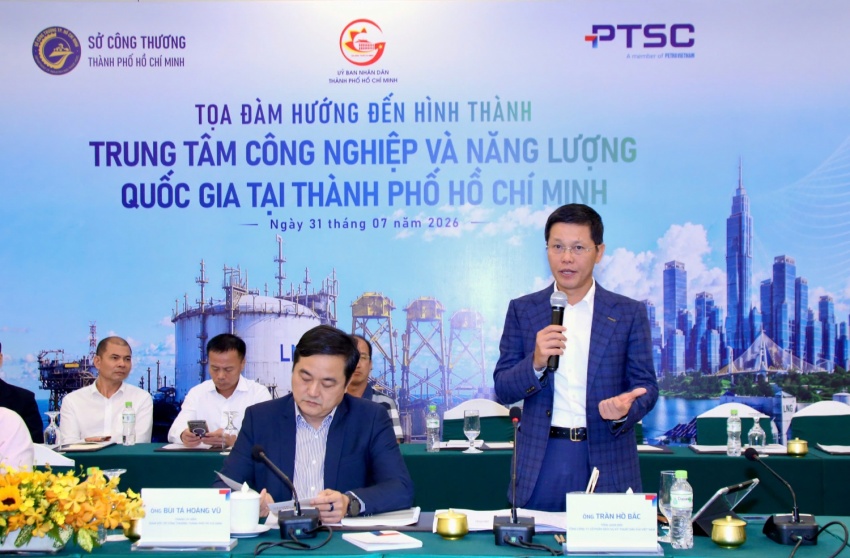
Mr. Tran Ho Bac, General Director of PTSC: The Proposal should more clearly reflect its national stature and international competitiveness objectives.
Drawing on PTSC's experience operating in more than 14 countries, Mr. Tran Ho Bac noted that competition in the energy sector takes place between supply chains and national capabilities. The Proposal therefore needs to consider energy costs, export markets for electricity, hydrogen, oil and gas products, and equipment. Regional energy connections, including the ASEAN power grid, also create opportunities for Ho Chi Minh City to establish a leading position.
According to Mr. Tran Ho Bac, the Center's competitive advantage must be built on a supply chain comprising hundreds of enterprises, with leading companies playing a central role in guiding and connecting the ecosystem.
Mr. Tran Ho Bac also highlighted the human resource challenge. He noted that Ho Chi Minh City has an advantage in attracting engineers and experts but is facing a shortage of skilled workers in electrical engineering, mechanical engineering, automation, and high-tech welding. Human resource development for the Center therefore needs to cover researchers, engineers, and the direct production workforce.
Connecting the Center with the energy industry value chain
Mr. Le Viet Cuong, Deputy Director of the Institute of Energy under the Ministry of Industry and Trade, stated that the Proposal should position Ho Chi Minh City within the national strategy for developing a green and clean energy industry. The Center should not merely be a collection of energy projects but should contribute to forming value chains and strengthening industrial self-reliance.
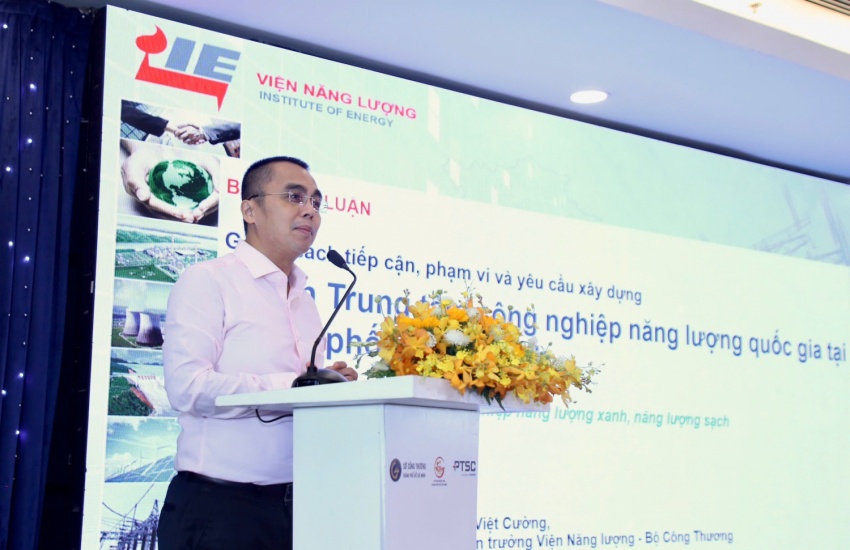
Mr. Le Viet Cuong, Deputy Director of the Institute of Energy under the Ministry of Industry and Trade: The Proposal should position Ho Chi Minh City within the national strategy for developing a green and clean energy industry.
Accordingly, Ho Chi Minh City can serve as an "implementation hub" thanks to its ability to connect markets, seaports, logistics, the oil and gas industry, technical services, research, and finance. On that foundation, the Center needs to meet three requirements: ensure energy security; develop a green and clean energy industry; and prepare future capabilities in data, hydrogen, carbon capture, and high-quality human resources.
The core question is: Which stages of the energy industry value chain will the Center in Ho Chi Minh City help Vietnam control? Project selection should therefore be based on the level of participation by Vietnamese enterprises, localization potential, technology transfer, and emission reduction effectiveness.
Regarding the Proposal's multi-pole model, Mr. Le Viet Cuong stated that the function of each pole needs to be clearly defined, while coordination mechanisms, shared data, and "soft infrastructure" should also be established. These are necessary conditions for the poles to operate in an interconnected manner rather than developing as separate projects.
Experience in developing renewable energy centers
Mr. Riccardo Felici, OWC's Regional Director for Asia-Pacific, analyzed the role of renewable energy centers. In his view, Ho Chi Minh City has significant advantages because wind and solar power resources are located close to major load centers, while deep-water ports, fabrication facilities, logistics, and an oil and gas technical workforce are already available. This model should be built on four pillars: infrastructure, manufacturing, skills, and innovation.
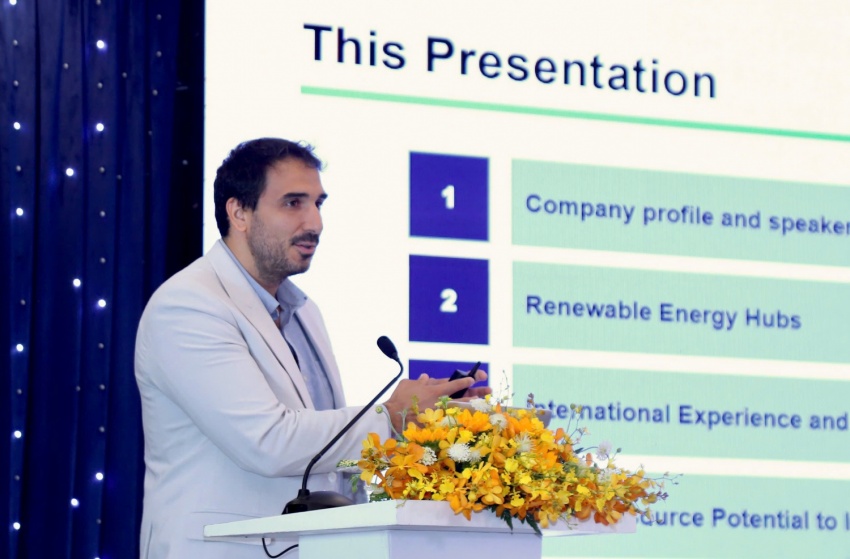
Mr. Riccardo Felici, OWC's Regional Director for Asia-Pacific.
Drawing on the experience of the Humber industrial cluster in the United Kingdom, Mr. Riccardo Felici emphasized that a long-term project pipeline enables enterprises to invest in ports and factories, while infrastructure and human resources must be prepared early. Focused planning, policies, and investment will help reduce risks for private capital.
For Ho Chi Minh City, he stated that financial, design, research, and training capabilities should be connected with ports, fabrication yards, and coastal installation and maintenance bases. This linkage will transform resource potential into supply chains, jobs, and service capabilities for the regional market.
RE-Hub lays the foundation for the offshore wind supply chain
Mr. Nguyen Tuan, Head of PTSC's Commercial Division, stated that the scale of offshore wind development will generate substantial demand for fabrication, transportation, installation, operation, and maintenance. Under the revised Power Development Plan VIII, offshore wind capacity is expected to reach 6-17 GW during 2030-2035 and 113-139 GW by 2050.
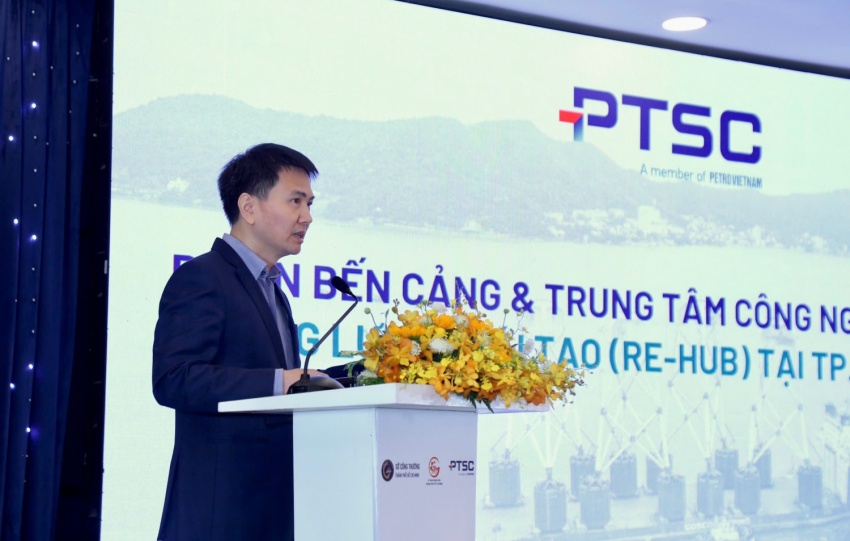
Mr. Nguyen Tuan, Head of PTSC's Commercial Division, stated that the scale of offshore wind development will generate substantial demand for fabrication, transportation, installation, operation, and maintenance.
In response to this demand, PTSC has proposed developing a Renewable Energy Port and Industrial-Service Center (RE-Hub) in Ho Chi Minh City, integrating production and fabrication, technical and logistics services, and renewable energy. The RE-Hub should be located near offshore wind development areas, supported by a mechanical industry, technical workforce, and specialized ports capable of handling oversized and overweight components. International experience shows that port infrastructure must be prepared in advance to attract equipment manufacturing plants.
PTSC considers the feasibility of implementing the RE-Hub to depend on progress in finalizing the offshore wind regulatory framework, preparing land reserves and the Dinh River channel, as well as the localization roadmap and investment attraction policies. The company also believes that the relationship between the RE-Hub, the National Industrial and Energy Center, and the International Financial Center in Ho Chi Minh City, together with pricing mechanisms, output markets, and development scenarios, should continue to be studied under the Proposal.
Maritime infrastructure determines the feasibility of energy projects
Mr. Ngo Manh An, Deputy Director of the Port and Waterway Engineering Consulting Center (PEC) at Portcoast Consultant Corporation, stated that maritime infrastructure is a prerequisite for a coastal industrial and energy center. Most energy materials, products, and components move through ports, while project scale depends on navigation channels, water areas, and land reserves behind the ports.
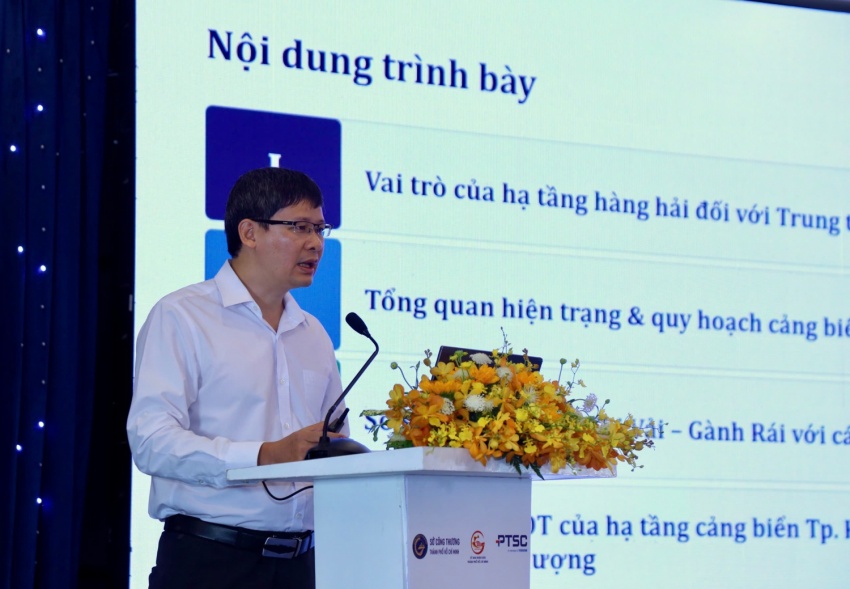
Mr. Ngo Manh An, Deputy Director of the Port and Waterway Engineering Consulting Center (PEC) at Portcoast Consultant Corporation, stated that maritime infrastructure is a prerequisite for a coastal industrial and energy center.
Portcoast assesses that the Cai Mep - Thi Vai - Ganh Rai area has advantages in navigation channels, land reserves, water areas, and the offshore oil and gas and marine engineering ecosystem. The main Vung Tau - Thi Vai navigation channel can accommodate vessels of up to 250,000 tons. Meanwhile, the Dinh River channel providing access to Sao Mai - Ben Dinh currently accommodates vessels of only about 10,000 tons, limiting the transportation of large components.
Portcoast has proposed upgrading the Dinh River navigation channel to accommodate vessels of approximately 70,000 tons. The company believes this project should be considered in the 2026-2030 medium-term public investment plan, while the functions of energy terminals should also be clearly defined in seaport planning.
According to Portcoast, the State should invest in or lead the development of navigation channels, transport connections, and shared infrastructure, while enterprises should invest in terminals, factories, equipment, and operations. This division of roles enables infrastructure to serve multiple projects simultaneously and improves long-term investment efficiency.
Ensuring energy supply for the new development space
Mr. Bui Ta Hoang Vu, Director of the Ho Chi Minh City Department of Industry and Trade, stated that the seminar was the first activity launching the process of developing the Proposal for a National Industrial and Energy Center in Ho Chi Minh City. The opinions shared at the seminar helped reaffirm the urgency of the Proposal amid rapidly rising energy demand, especially for clean energy, alongside a new wave of investment.
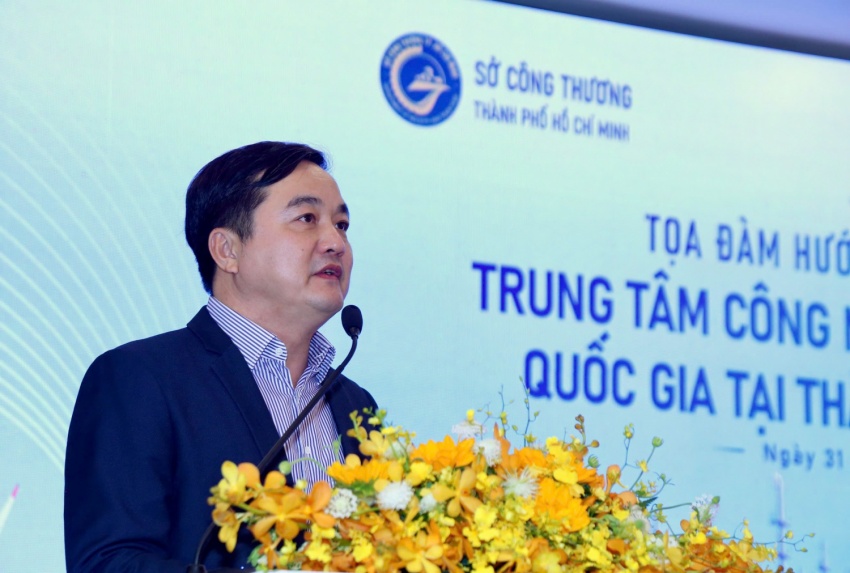
Mr. Bui Ta Hoang Vu, Director of the Ho Chi Minh City Department of Industry and Trade, emphasized the urgency of the Proposal amid rapidly rising energy demand, especially for clean energy, alongside a new wave of investment.
According to Mr. Bui Ta Hoang Vu, the new development space enables Ho Chi Minh City to connect the financial, service, and human resource strengths of the central area with industry in Binh Duong and the marine economy and energy sector in the Ba Ria - Vung Tau area. The City has a relatively strong infrastructure, industrial, and service foundation for developing the Center, while also aiming to supply energy products and services to the regional market.
The Director of the Ho Chi Minh City Department of Industry and Trade noted that the Proposal is still at the initial stage. The orientations and recommendations raised at the seminar need to be further studied and refined before being submitted to the competent authorities for consideration and decision. The Department of Industry and Trade will incorporate the feedback, maintain consultation channels, and organize additional in-depth seminars and workshops to complete the Proposal./.
Source: petrovietnam.petrotimes.vn
Pageviews: 0
Portcoast Makes History with Third Consecutive SAG Award
By thanhnien.vn - 28/07/2026
Portcoast Consultant Corporation - a certified Vietnamese science and ...
Port Relocation – A Strategic Step for Ho Chi Minh City
By sggp.org.vn - 26/07/2026
Relocating ports away from the city center will not only help ease tra...
Portcoast Successfully Deploys Digital Twin at Cai Mep - Thi Vai: A New Milestone for Vietnam's Digital Seaports
By dttc.sggp.org.vn - 16/07/2026
According to Mr. Pham Anh Tuan, General Director of Portcoast, develop...